Sunday, February 25, 2018

Guns: My Experiences & Perspectives

I have some experience with guns. In the Navy, I qualified with a .45 caliber handgun and a semiautomatic rifle for which I don't remember the designation. As a civilian, I have done target practices with guns. But I never had the desire for owning a gun. There was one occasion during a wilderness adventure when I thought that a gun might be handy. I saw a bear following me during a back country trip in Colorado. But I turned out to not be in danger. I think that it was just observing me. I did get a bigger knife later but the logistics of gun ownership while I was traveling outweighed the potential benefits. In the woods, I got by fine with supplies, fishing and some trapping. So hunting was unnecessary. Also, I never had a predatorial animal get close enough to be a threat. Although I had experienced dangers among humans, I also never felt that any of my experiences with people warranted a gun. But I had experiences which illustrates the dangers with some people owning guns.

Isla Vista, CA has a bike path which runs between the town and the UCSB campus. In the 1980's, the path was not very well lit. I had been living in Isla Vista for some time so I was use to the path. I once was walking along the path and was walking faster than a woman ahead of me. It was simply due to my natural pace. I had not previously encountered anyone on that path who showed signs of concern. Plus there were houses with patios facing the path. As I was about to walk past the woman, she suddenly sprayed mace point blank into my eyes. As painful as that was, I remember thinking how it was fortunately not a gun. Whether or not she would have been as reactionary with a lethal weapon is indeterminate. But this illustrates how people can be too reactionary. In her case, that may have been a one off event. But some people tend to be too emotionally reactive to situations. When I think of this event, I wonder if there ought to be some kind of tests to see if potential gun owners are emotionally stable enough.

I had an acquaintance who had always been nice to me but had a violent pattern when he drank alcohol. I initially did not know this because I was not in the same party circles. I stayed on his boat for a while when I was in between apartments. He would occasionally come by with his face in rather bad shape. These were due to fights which he would get in when he drank too much. He said that he usually doesn't remember much after the fights. When talking about it, he said that he got rid of a gun which he had because he did remember an incident where he was so outraged during a fight that he was on his way to getting the gun and shooting the guy who he had fought. But he changed his mind once he had gotten home. The next day, he got rid of the gun so that he would never be tempted like that again. A web search for "drunken shooting" lists a lot of cases where the drunks did use their guns while drunk. Might it be useful to restrict gun ownership when there is a pattern of violence, regardless of conviction?

A resident at a small apartment complex where I once lived opened her apartment up for a Christmas party. There was one guy who was a cousin or something of one of the residents. He didn't pace his alcohol consumption very well. By the early evening, he was quite drunk. With slurred speech, he began to wax affectionately about his gun collection. He pulled a picture out of his wallet. It was of his home vault of weapons. It showed a mix of handguns, shotguns, regular and assault style rifles. At some point, we realized that he wasn't around. We were concerned that he may have decided to drive. One of the people still at the party knew his car. We looked for it. It was gone. We checked with the neighbor who was related to him. The drunken guy wasn't there and did not answer his phone. It turns out that the guy has driven drunk before but the neighbor forgot about it. The neighbor described him as "not being all there". So the guy is irresponsible with a potentially deadly vehicle and also has an arsenal of weapons. This got me thinking that there could be a legal qualifier relating to drunk driving and gun use.

I was walking on a sidewalk. I looked to see if any cars were coming or going before I crossed an entrance to a strip mall. When I was halfway across, a truck came speeding into the parking lot so close that I had to stop walking and was able to reach out and tap the side of the truck. I was one or two steps from being hit by the truck. The driver stopped, got angrily out of the car and asked why I touched his truck. I told him because he carelessly sped into the parking lot in front of me. He could have easily have turned behind me or waited a moment in the turn lane. He was insistent that I was in the wrong and said that he had something in his car which would teach me a lesson. I didn't want to find out what he had so I ran.

There are a range of people with mental or emotional conditions who should not have access to guns. That is the reality of our situation. No amount of nearly religious interpretation of the second amendment gets around that. There are more qualifications for using vehicles and some work equipment than for guns, which are build with the intend to injure or kill.

There are good reasons why the default position is no for driving until people qualify for a license. And it is good that conditions exist where the license to drive can be revoked. It's unfortunate that it's easier to legally get guns and harder to revoke the "right" to guns than it is with drivers' licenses.

I like what I recently heard about the Japanese laws for gun ownership. People can own guns but the default position is no, as it is for a drivers license. People need to pass tests and other requirements before being licensed to own guns. Then owners need to requalify every few years. There are also restrictions based on a person's history and mental state. So there are people who own guns. But far fewer of the gun owners have issues which may influence bad use of the guns. Gun violence and crimes involving guns are extremely low.

As our population continues to increase and more people live in denser environments, it is logical and reasonable that we look more closely at gun qualifications.

Wednesday, February 14, 2018

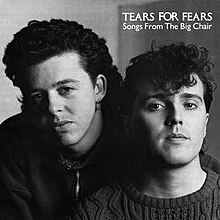
Music Appreciation: Tears For Fears Trilogy

This article refers to the following albums:

The Hurting orig.jpg
The Hurting (1983)

Tears for Fears Songs from the Big Chair.jpg
Songs from the Big Chair (1985)

Seeds of LoveLP.jpg
The Seeds of Love (1989)

There have been later albums. One of the duo used the band name for some of his work. Also, the duo reunited in the early 2000's. I am certainly not knocking the music during these periods. But I find the original trilogy of albums to be their best. And the 3 albums work together as a good set to listen in chronological order. Each album builds on elements from the previous one while moving into new territory, with The Seeds of Love being the pinnacle. I also think that the albums have aged quite well, especially The Seeds of Love.

Sunday, October 29, 2017

Complexities of Poverty

This is in response to a pattern which I see where people are singular in their perception of the cause and solution for poverty. There are certainly more elements to poverty than I discuss here. It's an article about some of the factors involved in poverty.

There's a lot of bandwagoning about poverty. Some people blame the wealthy, others blame the poor while the government is sometimes the scapegoat, as well as some types of charities. But putting the blame on just particular groups misses the complexity of economic status.

Even the definitions of poverty are problematic. Although there are rural poor, not all people with low incomes in rural areas live in poverty conditions. The numbers are different in places where a 2 bedroom house can rent for $300 a month. So too much focus on the numbers can misdefine and even degrade people's lives. I'm not saying that dollar values are not important. I'm just saying that wage as a measurement of poverty needs to be compared to other factors rather than the sole measure as some people use it.

There are different levels of poverty, some more damaging than others. Here's a definition which I think is useful. "Condition where people's basic needs for food, clothing, shelter, health and intellectual fulfillment are not being met. Poverty is generally of two types: (1) Absolute poverty is synonymous with destitution and occurs when people cannot obtain adequate resources to support a minimum level of physical and mental health. (2) Relative poverty occurs when people do not enjoy a certain minimum level of living standards as determined by a government (and enjoyed by the bulk of the population) that vary from country to country, sometimes within the same country."

However poverty is defined, the fact of the matter is that there are a substantial number of people who cannot afford the things necessary for heath and well being. For the purposes of this article, this will be the focus. So, what affects people's ability to have what is necessary for their health and well being? It varies widely and that is why the bandwagoning is so dangerous. Some cases of poverty have multiple issues.

I was once in a sever state of poverty. As a general description, let's say that I was homeless and destitute. It's not in the purview of this article to tell the whole story. But my situation was affected by multiple factors. Let's look at some of them.

People in better positions sometimes negatively impact people in lesser positions. This correlates to blaming the wealthy. In my case, it was upper management in a company using employee wage and hour manipulation to increase profit rather than develop a strategy which was good for both the company and employees. The company found itself in a bit of a financial slump largely caused by bad management decisions. Part of its strategy to show profit growth was to drastically drop long term employee hours and hire new people at a revised lower wage. In my department, there were 3 of us who had been with the company for several years and worked full time for most of those years. Our pay was a combination of hourly wage and commission. However, sales were completely dependent upon what we sold to walk-in traffic. All three of us had our hours cut from full time down to as little as 12 hours a week.  Since we were dependent upon walk-in traffic, it was difficult to increase sales per hour to compensate. In the end, we found ourselves at poverty level wages where we once made a comfortable income. The company's strategy was to replace lost hours by hiring students who were not solely dependent on their personal income.

Childhood environment can impact adult decision making. I was raised with a mentally handicapped mother and brother. This created an environment which impacted my development. I've known others with variations of intellectually challenged environments. Violence and the physical environment are also potential impediments to good childhood development. As an adult, I was accountable for my bad decisions but the causes of them included various conditioning factors relating to being influenced by the intellectually challenged family.

Existing environment can perpetuate either good or bad conditions. Between the lack of perceived resources and the influences of some others in the same conditions, I was in a self-perpetuating state of poverty for a while. I got better by changing my environment and the people who were influences. Unfortunately, a lot of people have bigger difficulties changing their environment.

Cognition is sometimes a factor in poverty. In my case, there were multiple cognitive factors. The childhood influences were a factor. When focused, I was quite smart and readily excelled at my endeavors. But some of my lack of focus and my reactionary tendencies were results of conditioning which I had to overcome. I also found that I fell in with other people who had rather chaotic states of mind. I managed to alter the conditions but I knew others who fell into even worse mental states. Much of what I describe here are "soft" cognitive issues which can be positively altered. But I think that it is also worth noting that there are various "hard" cognitive issues. My brother is an overt example. He is capable of living on his own but his 8 year old psychological state prevents him from progressing much beyond a minimal existence.  His is a more extreme case but neurological conditions, both diagnosed and undiagnosed, can be factors in poverty.

Government doesn't adequately look at the complexity. It's politically expedient to focus on singular causes or solutions while neglecting others. Deal with the issues most popular with the voters being pursued but don't tread too much into areas which need elevation of the public's perceptions. It's easier for some politicians to blame the top 10% and company CEO's while minimizing the problems with the rest of company culture. It's politically useful for others to blame the poor in a general sense without getting into the environmental, cultural and cognitive factors involved. It's easier to blame the poor when an inadequately designed program fails than admit the failings of the program. One experience which I had with the government was when a work program was created for people in need. I applied and was accepted. I was given a set amount of money in advance and paid it back by working for the city.  An additional requirement was that I had to show that I had applied for a set number of jobs each week. But the work assignments made that difficult. The work schedule was something like 8 - 5. I was assigned to outdoor work crews. After a full day of sweat and dirt, I was still expected to apply for a set number of jobs. But it was too difficult to apply for a lot of work which I could qualify for because I needed to clean up first.  This was an example of a good idea with rigid rules applied to an overly simplified plan.

But I think that people involved in the government and even charity groups would deal with more of the complexity if the voting public also did so. Politicians get on bandwagons because it is easy to get segments of the voting public onto bandwagons. This goes far beyond just the subject of poverty. In a sense, some of the cognitive factors which influence some people in poverty also affect the voting public. Too much of the voting public lack willingness or ability to focus on details. And they tend to be easily riled up to feverishly support reactionary policies rather than detailed multi-pronged strategies. This all allows some politicians and politically motivated media to mislead and misdirect.

More reading:
https://en.wikipedia.org/wiki/Poverty
http://dana.org/News/Poverty_and_Cognition__How_the_Poor_Get_Poorer
https://www.washingtonpost.com/national/health-science/poverty-strains-cognitive-abilities-opening-door-for-bad-decision-making-new-study-finds/2013/08/29/89990288-102b-11e3-8cdd-bcdc09410972_story.html?utm_term=.12ab9659f3ed
http://thepsychreport.com/research-application/featured-research/the-cognitive-burden-of-poverty/

Monday, August 28, 2017

The Progressive / Regressive War

This is the greatest conflict of all time. It has lasted for centuries and is global. At the same time that humanity's cognitive capacities progress, there have been groups who are set on regressing our intellectual and social capacities. Progressives eventually won in a number of places. But the regressives use subtle underground tactics when their usual brash and aggressive tactics are less effective. They slipped themselves back into politics at both national and local levels. They get into local governing positions in different areas and then network the areas turned regressive. They infiltrate schools. When that isn't successful, they attempt to damage public schools by diverting public funds to private schools via so-called choice or by opening schools controlled by religious groups. They force their extreme ideas into charitable projects. They force the needy to go through religious propaganda and rituals in order to receive assistance. They sometimes pretend to be the very progressives which they fight. They alter history to fit their beliefs. They also gather strength by consolidating their groups and forced gatherings. They indoctrinate their children and sometimes reject those who don't get trapped in the indoctrination. They use fear tactics. Regressives are more prone to violence either when they lose ground or when they feel the need to violently push their beliefs. The violence is partly due to the lack of a factual foundation.

The progressives sometimes unintentionally further the goals of the regressives. They are sometimes less cautious than warranted when they include regressive ideas into their suite of progressive movements. This sometimes has the effect of weekening the overall movement. It also gives ammunition to the regressives. Too many progressives don't take regressive political platforms into account when they vote for individuals who are tied to those platforms. Then the supposedly less regressive politician falls in line with the party's platform in order to further his or her position within the regressive party.

I personally believe that the regressives cannot win in the long term. But they can continue to cause damage as they gain and lose ground. The regressives have some avenues of influence which they control absolutely. Progressive infiltration into some of these avenues are very difficult whereas regressive corruption of progressive groups occur in part because of progressive openness. Although openness is integral to much of progressiveness, the regressives infiltrate traditionally progressive groups and corrupt them. In a way, I think of regressiveness as a disease. We've had it for most of humanity. It may not be completely curable but there are immunization options.

The war is complex. This is partially because there are opposing regressive factions with the progressives caught in the middle. It is further complicated by many of us who have a mix of progressive and regressive tendencies. In some cases, the dominance of one or the other shifts back and forth within people. Unfortunately, regressives have taken advantage of this fluctuation within people.

This is intended as an introduction to a series of blog and vlog entries which will discuss details of this war. I would like this to be a collaborative project. Leave comments if you have suggestions or want to contribute. I am not claiming that I have all the information. One difference which I see between progress and regress is being willing to say "I do not know" rather than acting on a false sense of knowledge. Acting on a false sense of knowledge seems to me to be one of the core elements of a lot of regressives. I will try to explore this in my next post.

I speak as someone who spent a large part of my life transitioning from being in one of the more regressive camps to being a progressively minded person. I was raised in a heavily religionist situation with environmentally and socially backward perspectives. But I saw some of the things which I was taught which was wrong. That eventually led me to question more and to question myself. After a rough transition period, I became better.


Wednesday, August 9, 2017

Hell Is Not For Children

This post is inspired by "Why I, an atheist, am afraid of hell" by CosmicSkeptic. I am also an atheist who had the fear of hell affect me periodically for years after I discontinued the beliefs. The conditioned emotional response was quite strong and depressing for the first few years. Although it has substantially mellowed in recent years, I still notice it from time to time.  I agree with Alex that it is child abuse regardless of the intentions. Fear is a primary emotion which can all too often occur even when it is completely contrary to the rest of a person's mental states. Conditioning which affects fear has been shown to sometimes last a lifetime. Fortunately, our other mental capabilities can compensate. But the dichotomy between the emotion and intellect can be disconcerting, even dangerously so. I think that it is valid to say that instilling unnecessary childhood fears which can negatively impact people into adulthood is abusive and unethical. This is especially the case since Hell is a fiction.

If it did exist, it is immoral. Hell would be immoral and an indication of God's immorality. The belief is that we will be punished for eternity if we don't make all the correct decisions in our short physical life. Believers in this expect more morality out of humans than they expect from their god. Only the worst tyrants and religionists have resorted to long term torture. And the scale adds to the evil. I have seen estimates that there have been more than 110 billion people on earth, which includes the current 6 billion. A bit over 50% of the current population are either Christian, Jewish or Muslim. Odds are that the majority of the others will not convert before they die. Go back a few thousand years and few people heard of the Abrahamic god. Now, it's a bit ambiguous regarding what happens to nonbelievers who have never heard of the biblical God or Jesus Christ. But we are still talking billions of people in Hell.  What is the justification? Any explanations are very shallow and only convincing for the conditioned believers. So how many billions of people will be eternally punished before the god is satisfied?

I believe that Hell is probably the worst idea out of many bad ideas in religions.

Saturday, July 29, 2017

Adjective Abuse

Donald Trump is not the only person in government to abuse the use of adjectives.  It's all too common in politics, especially among Republicans (use of disastrous, failing, fake, etc). To be clear, I define adjective abuse as being the use of adjectives to misrepresent reality. Trump's transgender tweets illustrate the con which adjectives can be. He tweeted about "tremendous" cost of transgenders in the military. But transgender medical costs are estimated on the high end to be .13 of 1% of the military budget and only 16% of Trump's golf trips so far this year. If transgender costs are defined as tremendous cost, what adjectives should be used for cost of Trump's pleasures on the American people?

Monday, May 15, 2017

A personal immigration experience

I traveled for a time after my last military job. I supplemented my finances by periodically doing temp and seasonal jobs. I worked with a wide range of people, including a lot of immigrants (documented and undocumented). There were a number of times when the crews were mixed. It was telling to see how many of the white guys would drop off while more of the immigrants stayed the length of the jobs. I also found that immigrants were more consistent to work with because they had fewer personal problems. A substantial number of the white guys who would hire onto these jobs had alcohol and personality issues whereas most of the immigrants who I worked with were sober and well balanced people.

See an interesting TYT article about this:
https://www.youtube.com/watch?v=RLf-gd8Rk2w&t=488s

Sunday, May 7, 2017

Movie Review - Passengers (2016)

My sci-fi preference is for hard science fiction.  I like as much science accuracy as possible.  In that vein, I also prefer psychological realism.  I can't relate if the portrayal of what people do and say are too far out of sink with how they would really act.  I have gotten more selective with what I watch because of these things.  I dislike being disappointed after I watch a movie or read a book.  For instance, I disliked Star Wars Force Awakens.  I'm even a bit forgiving toward the prequels.  But I think that Force Awakens stretched coherence too far.  But that deserves its own post.

I just watched Passengers (2016).  I had reservations because multiple reviews illustrated how much of the science was wrong and about the abusive action of Pratt's character.  But I liked the idea that it didn't have any intentional antagonists.  So I rented it.  Yes, it did get rather loose with the science.  But I thought that it had a compelling story and interesting character portrayals.  I thought that the positives outweighed the negatives.  You see, another thing with which I've gotten bored is the antagonist / protagonist method of story telling.  Some people claim that Pratt's character is the antagonist. But I think of the character as being someone who intends to be a good guy but makes a horrible mistake. 

The end result is that I felt that Passengers had enough for me to consider it to be enjoyable science fiction.  It had a good concept, generally good story progression, likable characters and no enemies.  That being said, it really could have done better by the science without being detrimental to the story.  But I will watch it again.

Sunday, April 23, 2017

The Kids Are Alright

I also created a YouTube video for this topic.

I recently heard someone not much older than me talking about how he thought that the current generation is fucked up.  This was a fairly well-to-do guy who seemed fairly smart.  But I think that his perspective on the “new generation” was dumb.  It was superficial.  For one thing, he’s judging a large group of people based on limited information.  Additionally, parts of both the good and bad of each generation are outgrowths of past generations.

Generational divides always seemed artificial to me.  I was born in a year which falls in both the “baby boomer generation” and the “generation x”.  People have argued which I should be grouped in.  But I argued against both terms.  I don’t give a fuck what age group people are in.  That only partially defines them.  Definitions of “generations” of people never seem to cover enough of the people.  It seems to me that the terms are more defining the period of time rather that the people.  And conditions of periods of time are not affected by a single age group.  I understand that various age groups have challenges and accomplishments unique to their age groups.  But the variations are so broad that it seems to me that defining them within a generation is a bit of an overgeneralization.

Every period of time has good and bad folks, people with different and conflicting intelligences.  From those different people, each period of time has progress and degeneration.  Those states of progress and degenerations are expanded by the “next generation”.  What makes things better or worse is partly dependent on whether the progress or degeneration has more momentum.  For a long time, we’ve generally seen more progress than degeneration.

To take a few steps back, I see many people’s nostalgia as limited in focus.  An example is this guy who was interviewed in Louisiana for a documentary about new waves of segregation via some attempts at public funding of some local charter schools.  He was talking about how life was better when he was a kid in the 1950’s.  Now, we are talking about Louisiana in the 1950’s.  This was part of the heavily segregated south where public resources were routed more for the betterment of white communities.  But he didn’t see how he was reminiscing about his limited experiences in his white culture and that other people of his age in the same area did not have the benefits that he did.  If he stepped out of his own memories and looked at the broader range of experiences during the time of his childhood, he may have had different opinions of his past and the current age.

Moving forward, I believe that the overall momentum is toward positive progress.  Yes, there are still areas where things have degraded.  But we need to be careful about placing blame on “the new generation”.  Some things are picked up from past ages, then made better or worse.  Let’s take litter as an example.  An older person might look at a littering young person and simply blame that person or that generation or culture.  But the littering person may very well have picked up the habit from an older person.  I have seen parents discarding trash on the street in the presence of their kids.  Kids often pick up behaviors from parents.  So those kids may become litterers because of the example set by the parents.  What I am trying to say is that a lot of behaviors are cross-generational.

That’s not to say that people of any age shouldn’t be held accountable for their actions.  But the blame can be spread a lot further than just one generation.  Overall, we are all in this thing called life together.  We collectively make things better or worse.  Yes, we have to hold people accountable for their behaviors and affects on others.  But I am tired of the oversimplified blame game that too many people do.  We do need to place blame where needed.  But we need to look at the details and not just our limited experiences when blaming large groups of people or even individuals.  As far as age groups go, I see a lot more fault in past generations both in what was done and what has been passed on.  There are currently a lot of issues but they are continuations of issues which have existed for a long time.  That being said, there is a lot of misinformation about the current state of things.  I recommend Steven Pinker’s book “The Better Angels of Our Nature” for some incites into how humanity is better today than in the past.  But even casual investigations show how each new generation in recent times have brought humanity overall into a better state.

I’m not a complete optimist.  There are environmental problems and areas of violence.  But these things, even the actions which people take, are mistakes compounded on mistakes.  There are a lot of difficulties ahead.  But it’s the kids of today who have the potential to continue the progress and lessen the degeneration, just as each generation has often, somehow managed to make some corrections of problems passed onto them from the past generation.  The degeneration which exists has its roots in the past.  So I say to those who want to blame the younger people for supposedly making things worse, look at your own age group for contributing factors.  Also, look a little broader and you will see more good than bad in many areas.

The fall of the roman empire and the decline of the middle eastern areas did not come about due to a single generation.  Many of the mistakes and extremism of the generations which caused the degenerations came from the conditions created by the previous generations.

As some older people can become too set in their ways, some young people can be a bit too reactionary.  Erroneous judgments about the motivations of older people can occur.  I remember an event in my 20’s.  I was at a party, which was getting rather loud.  It was in an apartment complex.  An older neighbor called to ask that we tone things done, which we did.  There were people who talked about the “old farts”.  A couple of us went over to talk with the couple.  While there, we could hear how our music was louder in their apartment than their own music.  So we understood that it wasn’t about the oldness but rather it was about our own empathy and courtesy.  They could have turned their speakers up to compensate for our loudness.  But that would have then affected the neighbors on the other side.  

And that brings me to an important thing.  When possible, It’s better to learn a bit more about others before making judgements.  Conversation is best.  Empathy is key.  See what it’s like on the other side.  There are times when quick judgements are needed but we are often too quick too often.  Related to quick justments are what I call stagnate cognitive filters.  People in all ages and most cultures have cognitive filters which don’t get updated or get clogged with inaccurate information.  And I think that updating and cleaning those filters will open us up to new and better possibilities.